
Facebook Marketing vs Instagram Marketing: Which Is Better?
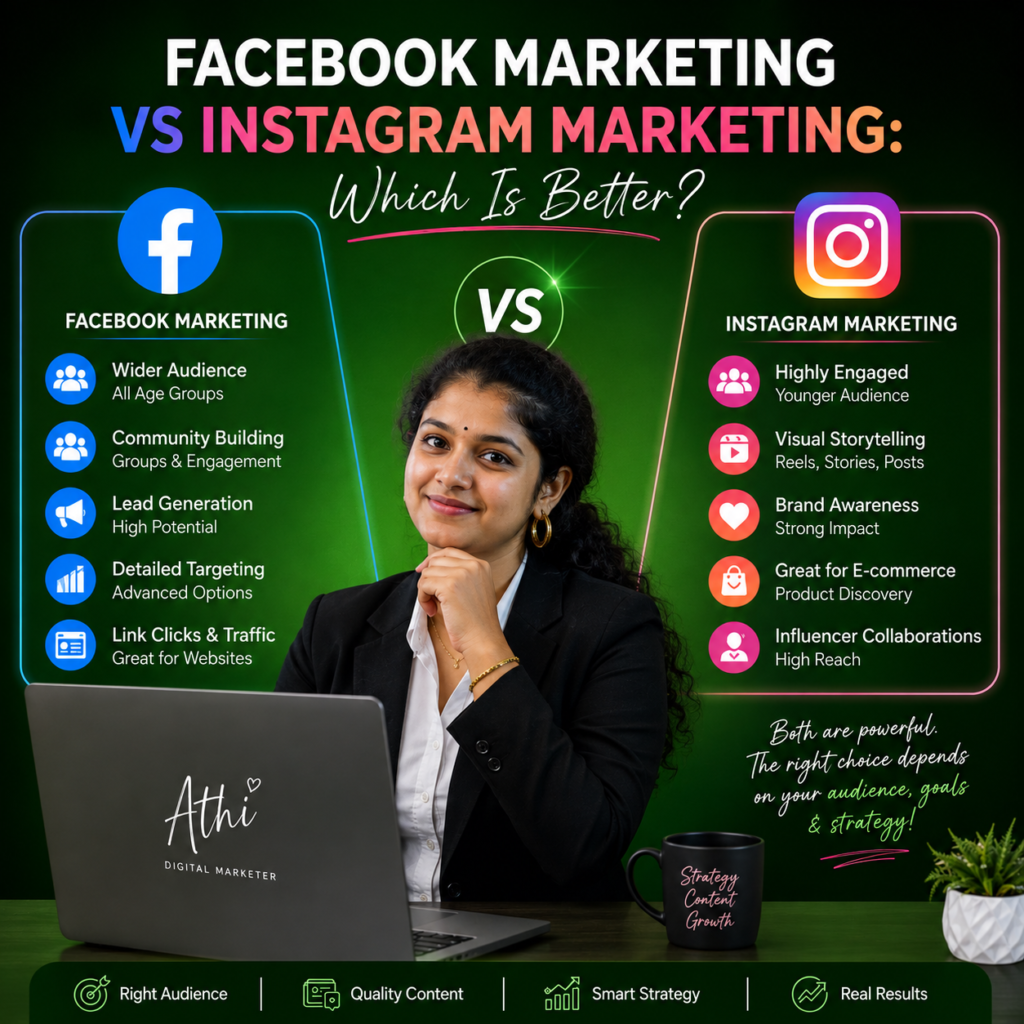
Facebook Marketing vs Instagram Marketing: Which Is Better? Social Media Marketing has become a must-do for digital marketing. No matter if it is a small local business, an online store, a personal brand or a service business – choosing the right social media platform may affect your online success a lot. Facebook and Instagram are two most used platforms for social media marketing. Both belong to Meta and both are managed through one advertising system of Meta, yet they do not have the same audience, content, and marketing opportunities. Thus comes a question: Facebook marketing vs Instagram marketing – which platform suits your business better? There is no universal way to choose Facebook or Instagram for marketing. The choice of a social media platform should be made according to your target audience, type of business, marketing goals, content style, and budget. Instead of choosing the most popular social media platform, you should understand how to use its marketing opportunities. In this guide, we will make comparison of Facebook and Instagram marketing, their audiences, content formats, engagement, advertising, lead generation, e-commerce and effectiveness. What Is Facebook Marketing? Facebook marketing is described as the act of marketing a brand, service, or product using Facebook marketing tools. The company can create Facebook pages, post on the page, post videos, take part in groups, message people using messenger, advertise, get leads, and direct users to their website. It works best for companies that want to create communities, generate leads, traffic their website, and attract customers from diverse ages. In addition, the community nature of Facebook makes the platform great for companies that rely on discussions, recommendations, client relationship, and local communities. Advantages of Facebook Marketing Some of the biggest advantages include: Broad audience reach Facebook Groups for community building Strong opportunities for lead generation Website traffic through posts and advertisements Messenger communication Local business promotion Multiple advertising formats Retargeting opportunities Longer-form content Events and community engagement Facebook can be especially useful for professional services, local businesses, B2B companies, education providers, real estate businesses, and brands targeting mature audiences. What Is Instagram Marketing? The process of Instagram marketing revolves around mostly visual components like photos, video, stories, reels, carousel, and creators collaboration. Instagram has been created to enable visual discovery, thus making it ideal for businesses in which visuals such as looks, branding, lifestyle, personality, and demonstration become involved. Instagram is amazing for marketing purposes in which the businesses involved with fashion, beauty, food, travel, fitness, hotel, personal branding, eCommerce, photography, and other types of creative businesses are included. Instagram marketing mostly consists of content posting, Reels, Stories, community building, hashtag usage when necessary, influencer or creator collaboration, and paid ads. Facebook Marketing vs Instagram Marketing: The Key Differences There can be no winner when it comes to comparing these two platforms. 1. Audience It is true that Facebook has a wide-ranging consumer base and is quite beneficial if you are a business that requires reaching different age segments. In the current age, marketing comparisons usually suggest that Facebook has a wider and comparatively older audience base while Instagram is popular among younger audiences. Instagram is especially beneficial if your customers are people who consume content in a visual manner. As such, your choice would depend on your customer profile. If your target customers are people who are professionals, parents, homeowners, or are old, then Facebook can be extremely useful for you. However, if your customers are younger people interested in lifestyle, fashion, beauty, travel, food, entertainment, etc., then Instagram may work better for you. 2. Content Formats Facebook supports many different content formats, including: Text posts Images Videos Reels Stories Links Polls Events Group discussions Live videos Instagram is more visually focused. Its major formats include: Reels Stories Carousel posts Photos Videos Live videos If your business can create visually attractive short-form content, Instagram can be an excellent choice. For example, a restaurant can showcase food through Reels, while a digital marketing consultant can use carousels to explain SEO tips. Facebook, on the other hand, can be useful for detailed educational posts, discussions, links, community conversations, and lead generation. 3. Engagement Instagram is generally considered a highly visual and engagement-driven platform. Users frequently interact with Reels, Stories, carousels, comments, shares, and direct messages. Facebook’s engagement model is broader. Users interact with posts, Groups, videos, Reels, comments, Pages, and community discussions. However, engagement should not be your only KPI. A post receiving thousands of likes is not necessarily more successful than a post generating ten qualified leads. Your business should measure results based on your objective. For example: Brand awareness → Reach and impressions Engagement → Comments, shares, saves and interactions Lead generation → Qualified leads Website growth → Clicks and conversions E-commerce → Sales and revenue Personal branding → Profile visits, followers and enquiries 4. Advertising One major advantage of Facebook and Instagram is that businesses can manage advertising through Meta’s advertising ecosystem. The same advertising infrastructure can support campaigns across Facebook and Instagram, while businesses can choose placements based on campaign objectives and audience behaviour. Facebook advertising can be effective for: Lead generation Website traffic Local businesses B2B marketing Retargeting Service-based businesses Instagram advertising can be particularly effective for: Brand awareness Product discovery E-commerce Reels Stories Visual products Creator-led campaigns Instead of automatically spending your entire budget on one platform, test different placements and measure actual conversions. 5. Lead Generation If your main objective is lead generation, then Facebook might come in handy for you. Companies can utilize lead ads, Messenger, calls, website landing pages, and other techniques to convert social media followers into leads. For instance, an online marketing agency may launch an ad campaign whereby users get free SEO analysis. The user sees the ad, provides his or her details, and turns out to be a prospect. Another social network that helps to create leads is Instagram. It creates leads via DMs, profile links, Stories, lead ads, and even ads. DMs from Instagram would be especially helpful for personal brands